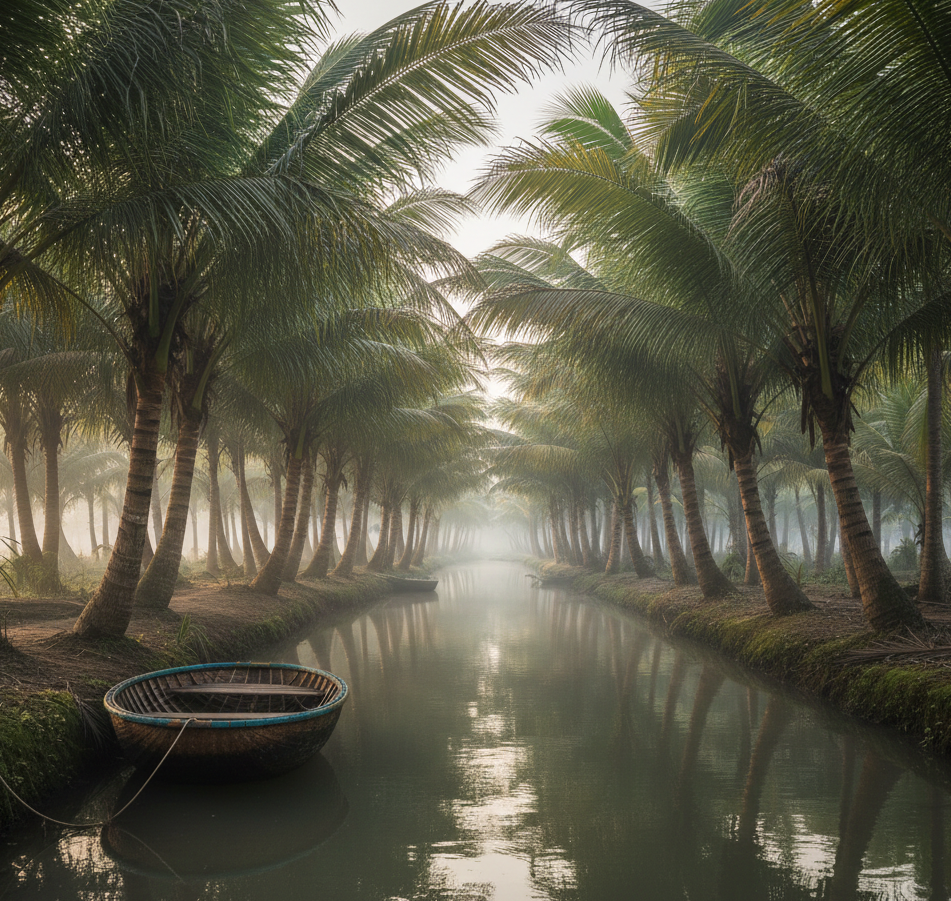
Just a short distance from the lantern-lit streets of Hoi An Ancient Town lies a very different environment. The Cam Thanh Coconut Forest is a quiet network of waterways, palm trees, and small fishing communities shaped by both nature and history. For many travelers, this area becomes their introduction to rural life in central Vietnam through a basket boat tour in Hoi An.
This guide explores the coconut forest beyond the boat ride itself. It explains how the forest formed, why it matters ecologically, and how local families continue to live and work along its waterways today.
Where Is Cam Thanh Coconut Forest Located?
Cam Thanh Village is located about 5 kilometers southeast of Hoi An Ancient Town. The coconut forest sits between the Thu Bon River and the coast, creating a natural buffer of wetlands and water channels.
Because of its location, the area has long supported fishing, small-scale farming, and water-based transportation. Today, it remains one of the most accessible nature-focused experiences near Hoi An.
A Brief History of the Coconut Forest
Origins of water coconut palms
The coconut palms found in Cam Thanh are not the tall beach coconuts commonly associated with tropical islands. These are water coconut palms, a species adapted to brackish water and tidal environments.
Local accounts suggest that the forest expanded naturally over generations as sediment from nearby rivers created ideal growing conditions. Over time, the palms formed dense corridors along shallow waterways.
The forest during wartime
During periods of conflict in the 20th century, the coconut forest played an unexpected role. Its thick vegetation and winding channels provided shelter and concealment for local villagers.
Remnants of this history are sometimes shared by guides during a coconut basket boat experience, offering insight into how the landscape shaped survival strategies.
Why the Coconut Forest Is Ecologically Important
A natural water filter
The Cam Thanh Coconut Forest acts as a natural filtration system. The palm roots help stabilize riverbanks, reduce erosion, and filter sediments from tidal flows.
This function supports healthier waterways not only within the forest but also downstream toward Hoi An.
Wildlife and biodiversity
Although subtle, the forest supports a range of life, including:
-
Small fish and crabs
-
Water birds
-
Insects and aquatic plants
Visitors on a basket boat tour in Hoi An may notice fishing traps or hear birds moving through the palms, especially during quieter parts of the day.
Daily Life in Cam Thanh Village
Fishing as a way of life
Fishing remains central to daily life in Cam Thanh. Many residents rely on:
-
Small nets and traps
-
Shallow-water fishing techniques
-
Knowledge passed down through generations
Basket boats were traditionally used to navigate narrow channels where larger boats could not pass.
Basket boats and local craftsmanship
The round bamboo basket boat is a practical response to local conditions. Built from woven bamboo and sealed with resin, these boats are lightweight, durable, and well-suited to calm waters.
While some are now made for tourism, the design remains rooted in everyday use rather than performance or decoration.
How Basket Boat Tours Connect Visitors to Local Life
A coconut basket boat experience is often led by residents of Cam Thanh Village. This creates opportunities for visitors to learn directly from people who live and work in the forest.
Guides may explain:
-
How fishing traps work
-
Why waterways change with tides
-
How the forest supports village livelihoods
This interaction is one of the main reasons travelers include the forest among their things to do in Hoi An.
Seasonal Changes in the Coconut Forest
Dry season (February to August)
-
Water levels are steady
-
Clear reflections beneath the palms
-
Comfortable conditions for longer rides
The forest feels open and calm during this time.
Rainy season (September to January)
-
Lush green growth
-
Slightly higher water levels
-
Cooler temperatures
The sheltered waterways mean basket boat tours usually continue even during rain, with routes adjusted if needed.
What Visitors Typically Observe on the Water
During a basket boat tour in Hoi An, visitors may notice:
-
Tidal movement changing water direction
-
Sunlight filtering through dense palm leaves
-
Fishing equipment stored along banks
-
Quiet moments broken only by paddling sounds
These small details reflect how closely daily life is tied to the water.
Cultural Significance of the Forest
Community and cooperation
Life in Cam Thanh has traditionally depended on cooperation. Managing waterways, maintaining boats, and sharing fishing areas requires coordination among families.
This community-based approach continues today and influences how tours are conducted—with an emphasis on shared space and respectful movement through the forest.
Passing knowledge to the next generation
Children in the village grow up learning how to paddle, fish, and read the water. These skills are not taught formally but through observation and participation.
Basket boat tours help preserve awareness of these traditions by making them visible to visitors.
How the Coconut Forest Fits Into a Hoi An Itinerary
The Cam Thanh Coconut Forest offers a contrast to the historic architecture of Hoi An Ancient Town. Many travelers choose to visit the forest as:
-
A half-day nature experience
-
A calm activity between walking tours
-
A family-friendly cultural outing
It pairs naturally with countryside cycling or market visits.
Responsible Travel in the Coconut Forest
Visitors can support the forest and local community by:
-
Respecting quiet zones
-
Avoiding litter
-
Following guide instructions
-
Understanding that this is a working environment
A thoughtful approach helps maintain the forest for future generations.
Final Thoughts
The Cam Thanh Coconut Forest is more than a backdrop for a photo opportunity. It is a living landscape shaped by history, ecology, and daily routines. A basket boat tour in Hoi An offers a gentle way to explore this environment while learning how people and nature coexist in central Vietnam.
For travelers seeking deeper context behind popular activities, understanding the forest adds meaning to the experience and highlights why it remains an essential part of local life.