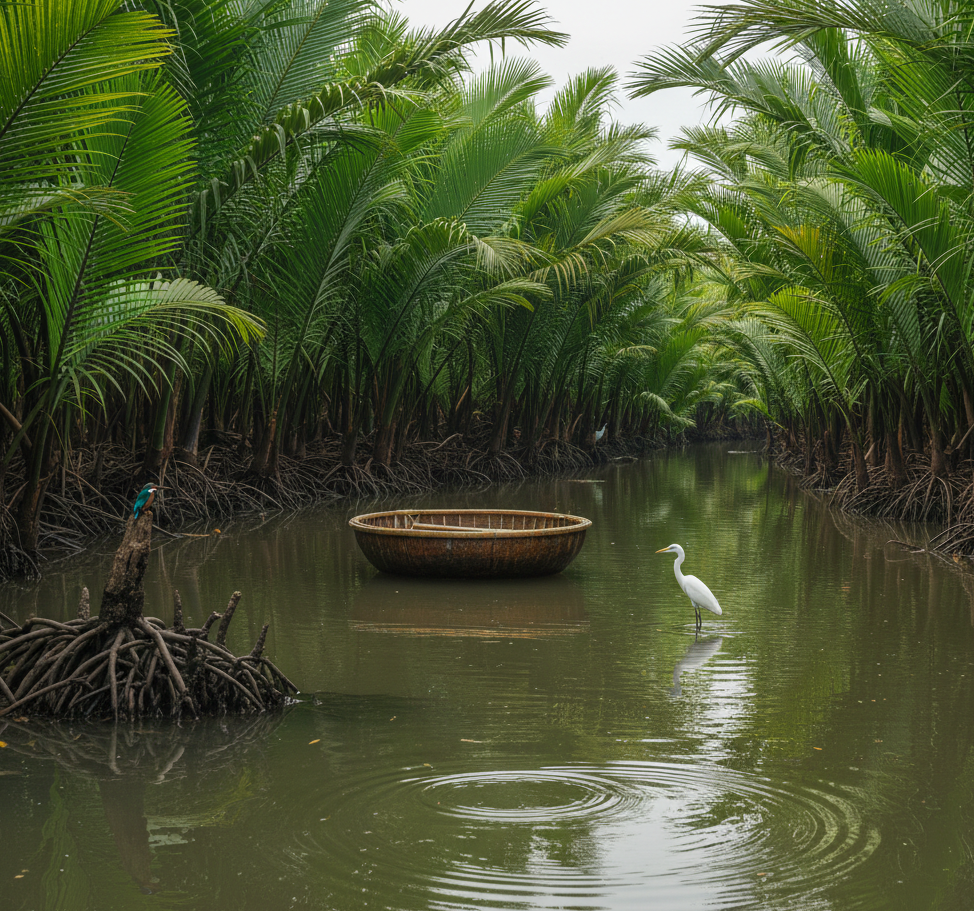
While many travelers come to Hoi An for its historic streets and lantern-lit evenings, a basket boat tour in Hoi An reveals a very different side of the region: the Cam Thanh Coconut Forest. Beyond being a scenic backdrop for photography and leisure, this forest is a vital ecosystem that supports biodiversity, protects waterways, and sustains local communities.
This guide explains the environmental importance of the forest, how its waterways function, and why preserving this unique ecosystem matters for both nature and tourism.
Overview of the Cam Thanh Coconut Forest
Cam Thanh Coconut Forest is located just southeast of Hoi An Ancient Town. It consists of:
-
Dense water coconut palms (Cocos nucifera var. water coconut)
-
A network of calm canals and creeks
-
Surrounding wetlands and tidal areas
Historically, the forest developed naturally as the sediment from rivers created ideal conditions for water palms. Today, it continues to act as a green lung for the region.
Why the Coconut Forest Matters Ecologically
1. Natural Water Filtration
The dense palm roots and surrounding wetlands filter sediments and impurities from water flowing toward the Thu Bon River. This natural filtration helps:
-
Maintain cleaner waterways downstream
-
Support fish and aquatic species
-
Reduce erosion along riverbanks
For travelers, this contributes to the calm, clear waters seen on a basket boat tour in Hoi An.
2. Coastal and Flood Protection
The Cam Thanh Coconut Forest acts as a natural barrier against:
-
Tidal surges from nearby rivers and the coast
-
Heavy rainfall and localized flooding
-
Soil erosion along canals
The forest’s dense root systems absorb water and stabilize the soil, reducing the risk of environmental damage to nearby villages.
3. Habitat for Wildlife
The ecosystem supports diverse wildlife, including:
-
Birds: kingfishers, egrets, herons
-
Aquatic life: fish, crabs, and small shellfish
-
Insects and amphibians that form part of the food chain
During a basket boat tour, visitors often see these species, offering insight into the interdependence of plants and animals in the forest.
4. Carbon Sequestration
Water coconut palms, like other vegetation, absorb carbon dioxide and produce oxygen. Although small compared to large forests, the Cam Thanh Coconut Forest contributes to regional carbon balance, making it an environmentally significant area near Hoi An.
The Human-Nature Relationship
Sustainable Use by Local Communities
Cam Thanh Village residents have historically depended on the forest for:
-
Fishing in shallow waterways
-
Collecting coconut leaves and husks for crafting
-
Small-scale aquaculture
The basket boats themselves were invented to navigate these channels efficiently, reflecting how humans adapt to and live within the ecosystem.
Tourism and Preservation
Tourism—especially basket boat tours—provides an economic incentive to maintain the forest. Responsible tourism ensures:
-
Minimal impact on water quality
-
Respect for wildlife
-
Conservation awareness among visitors
This helps balance the needs of nature and community livelihoods.
Seasonal Changes in the Ecosystem
Dry Season
-
Water levels are steady and calm
-
Wildlife activity is easier to observe
-
Plant growth is stable, creating clear navigation paths for basket boats
Rainy Season
-
Canals swell slightly, enriching the soil
-
The forest appears greener and more vibrant
-
Some wildlife may become more active
Understanding seasonal changes helps visitors appreciate the dynamic nature of the ecosystem.
Educational Value for Visitors
Basket boat tours offer a practical way to learn about:
-
How tidal waterways shape plant growth
-
The balance between human activity and natural processes
-
Conservation challenges in rural Vietnam
For eco-conscious travelers, the forest is a living classroom that demonstrates the importance of preserving natural habitats.
Threats and Conservation Efforts
Environmental Threats
-
Deforestation for agriculture or urban development
-
Pollution from upstream sources
-
Overfishing or misuse of waterways
Local Solutions
-
Community-managed waterways
-
Sustainable tourism programs
-
Small-scale restoration projects
These efforts allow travelers to experience the forest while supporting long-term ecological health.
How Visitors Can Support the Ecosystem
-
Choose tours operated by local guides
-
Avoid littering or leaving debris in the water
-
Respect wildlife and avoid disturbing habitats
-
Observe and learn rather than extract
Even small actions contribute to the forest’s ongoing health and sustainability.
How This Fits Into Things to Do in Hoi An
-
The Cam Thanh Coconut Forest adds a nature-based dimension to Hoi An travel
-
Pairing a basket boat tour with cycling, local markets, or cooking classes offers holistic cultural and ecological experiences
-
Visitors leave not only with memories but also an understanding of the environmental importance of the area
Final Thoughts
The Cam Thanh Coconut Forest is more than a scenic backdrop for a basket boat tour in Hoi An. It is a functioning ecosystem that sustains wildlife, protects communities, and offers travelers a unique glimpse into the delicate balance between humans and nature. Recognizing its ecological significance enhances appreciation for the peaceful waterways and underscores the value of responsible travel in Hoi An.